Color-Indicating Silica Gel: The Smart Moisture Absorber for Modern Packaging
Introduction
In today’s world of manufacturing and logistics, protecting products from environmental damage is a constant challenge. Among all threats, moisture is the number one enemy—silent yet destructive. Even a small amount of water vapor can cause food to mold, medicine to degrade, electronic components to short-circuit, or exported goods to be returned. These issues not only reduce product quality but also cause serious financial losses for businesses.
To tackle this problem, color-indicating silica gel desiccants have emerged as a smart and reliable “guardian.”
Beyond their impressive ability to absorb large amounts of moisture from the packaging environment, these desiccant beads feature a color-changing indicator, allowing users to easily see when the gel is saturated and needs replacement.
This convenience and safety make silica gel one of the most trusted moisture-control solutions across many industries.
How Color-Indicating Silica Gel Works
Silica gel desiccants are made from silicon dioxide (SiO₂) — a natural mineral found in sand and quartz. Through industrial processing, this material is transformed into porous microbeads containing millions of tiny pores that trap and hold moisture from the air.
These pores allow each bead to absorb up to 15% of its own weight in water, meaning just a few grams of silica gel can effectively protect an entire product package from dampness and mold.
For color-indicating silica gels, the moisture absorption process can be visually tracked:
-
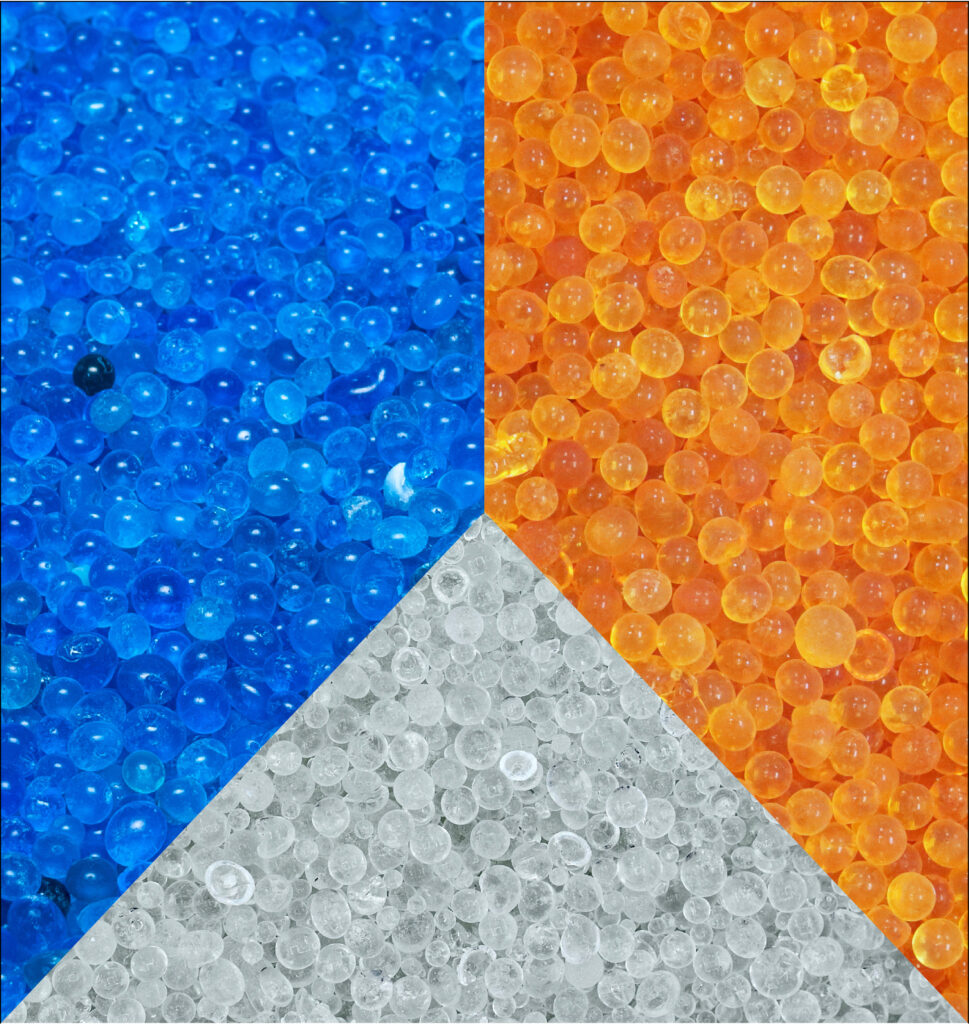
Orange beads turn green when saturated.
-
Blue beads turn light pink after absorbing moisture.
This clear color-change mechanism lets users easily monitor desiccant effectiveness with the naked eye—no need for expensive humidity sensors or complex measuring devices.
Which Type of Silica Gel Should You Choose?
On the market today, color-indicating silica gels come in two main types:
1. Orange Silica Gel (Cobalt-Free)
This is the recommended and widely used type due to its safety.
When dry, the beads are bright orange; when fully saturated, they turn green.
These beads are non-toxic, environmentally safe, and meet international safety standards, making them ideal for use in:
-
Food preservation (snacks, coffee, tea, milk powder)
-
Pharmaceutical packaging
-
Cosmetics and skincare products
-
Agricultural seeds
-
Electronic components
-
High-value consumer goods requiring a dry environment
2. Blue Silica Gel (With Cobalt Chloride)
Blue beads turn pink after absorbing moisture.
However, they often contain cobalt chloride, a compound classified as potentially harmful to human health.
For this reason, the European Union restricts its use, though some regions like the US still allow it in non-consumer sectors such as electronics.
Tip: Businesses should carefully choose the appropriate silica gel type—one that balances effective moisture absorption with compliance to export market regulations.
Read more: “Pharmaceutical-Grade Silica Gel Desiccant: Sam Lan’s Global-Standard Solution.”
Practical Applications of Silica Gel Desiccants
Color-indicating silica gel has become an indispensable ally across multiple industries, including:
-
Food industry: Keeps snacks, coffee, tea, and milk powder fresh, dry, and flavorful.
-
Pharmaceuticals: Protects tablets, capsules, and powdered medicines from moisture to maintain potency.
-
Electronics: Prevents short circuits and corrosion in chips, PCBs, and telecommunication devices.
-
Fashion & Footwear: Prevents mold in leather goods and keeps garments odor-free during storage.
-
Export packaging: Maintains product integrity during long-distance sea freight, especially in humid tropical climates.
Thanks to its versatility, color-indicating silica gel has become a benchmark for smart moisture-control packaging solutions.
How to Use Silica Gel Effectively
To maximize performance, follow these best practices:
-
Calculate the right dosage:
Use 5–10g of silica gel per 1 liter of packaging volume. For containers, calculate based on cubic meters. -
Position strategically:
Place the desiccant near areas most prone to humidity exposure. -
Monitor the color:
When the beads change to their saturation color (green or pink), replace or regenerate them by drying. -
Choose the right type:
For products related to food, health, or cosmetics, always opt for orange (non-toxic) silica gel.
By following these simple guidelines, businesses can save on storage costs and prevent product damage caused by moisture.
Explore more: “Everything you need to know about silica gel pouches”
Conclusion
Color-indicating silica gel is more than just a desiccant—it’s a smart, cost-effective, and reliable solution that helps businesses control humidity, protect goods, and reduce maintenance costs.
By choosing the right type of silica gel, using it in proper quantities, and following export market standards, companies can ensure long-term quality protection for both products and consumers.
If you’re looking for a safe and efficient moisture-absorbing solution, Sam Lan is your trusted partner.
With years of experience supplying international-standard desiccant materials, Sam Lan delivers premium-grade silica gel products tailored to diverse industries.
Contact Sam Lan today for expert consultation and discover how to optimize your packaging with advanced moisture protection—ensuring your goods stay fresh, safe, and export-ready.
 News - Events
7 Surprising Benefits of Using Desiccant Packets
 News - Events
6 “Fatal” Mistakes When Choosing Food Packaging and How to Fix Them
 News - Events
3 Tips for Using Seal Liners Effectively
 News - Events