Why Does Product Still Get Moldy When Using Silica Gel Desiccant?
Why Using Silica Gel Desiccant Still Fails to Protect Products
Silica Gel desiccant has long been considered a popular moisture protection solution in product storage and manufacturing processes. However, many businesses and users still face a frustrating situation: despite using desiccants, products continue to develop mold, moisture damage, or deterioration.
So where does the problem lie? Is it because the Silica Gel is no longer effective, or because the business is using it incorrectly, applying the wrong method, or using the wrong dosage?
In this article, Sam Lan will analyze the root causes from a technical perspective, breaking down each factor in detail. At the same time, we provide practical and effective moisture protection solutions for manufacturing, packaging, and export-oriented businesses.
What Is Silica Gel Desiccant? Why Does Using It Still Result in Mold?
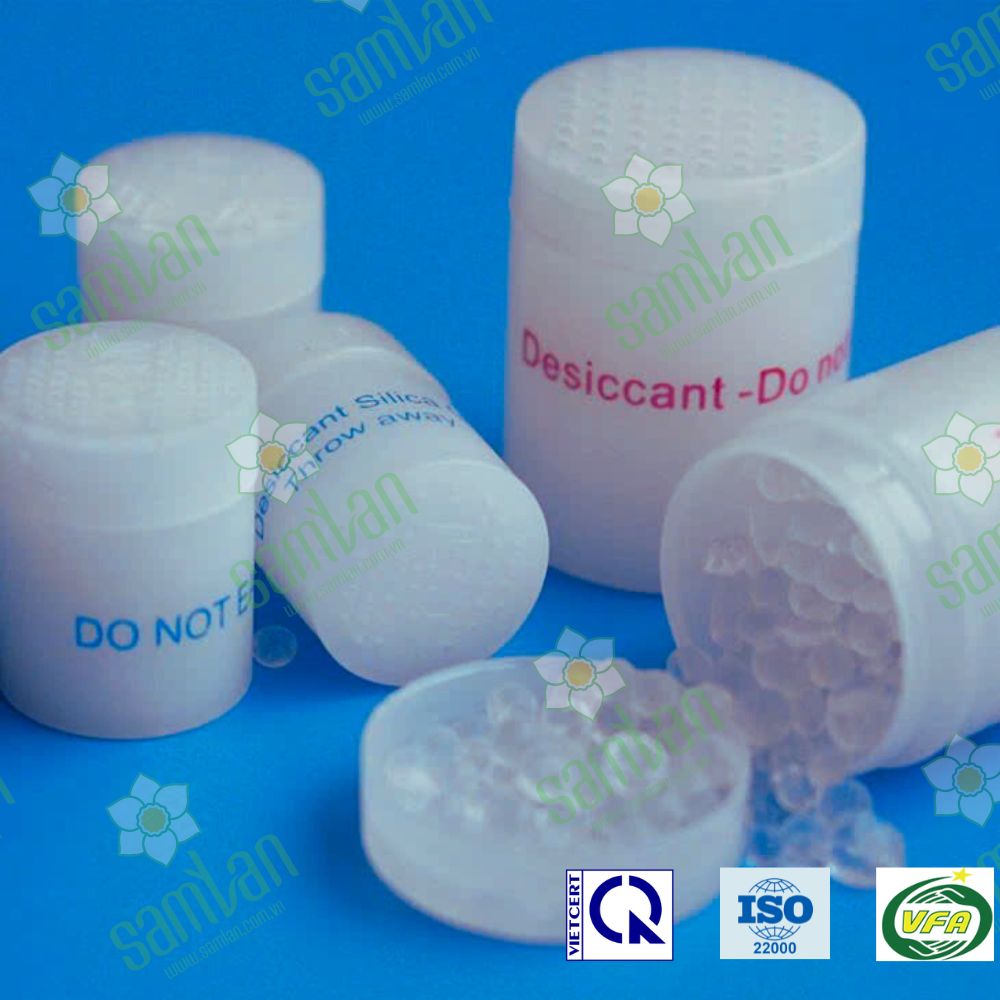
Silica Gel desiccant is a form of silicon dioxide (SiO₂) in granular form. It has a highly porous structure with millions of microscopic pores. Thanks to this structure, silica gel has the ability to:
- Absorb moisture from the air
- Reduce relative humidity in enclosed spaces
- Help limit mold growth, oxidation and corrosion
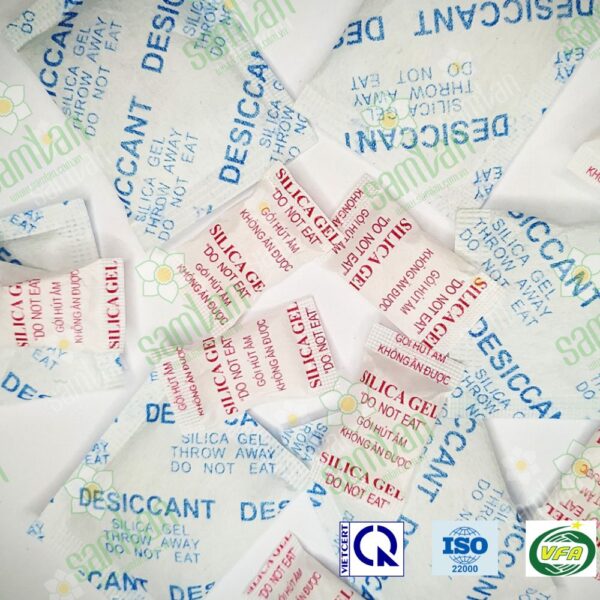
Therefore, silica gel desiccants are widely used in preserving dry food, pharmaceuticals, electronics, footwear, garments, and export packaging.
Why Using Silica Gel Desiccant Still Causes Product Damage
Incorrect desiccant dosage
This is the most common mistake many businesses make. Many assume that adding 1–2 silica gel packets into packaging is sufficient. In reality, silica gel has a limited absorption capacity. Each gram of silica gel can only absorb about 30–40% of its own weight in moisture.
When the package contains products with high moisture content, or when the storage environment has humidity levels above 70% RH, using only 1–2 silica gel packets is completely insufficient.
As a result, the desiccant quickly becomes saturated with moisture. Once saturated, it loses effectiveness, and mold can still develop.
Non-airtight packaging, moisture continuously entering
Many people overlook packaging quality, even though it is a decisive factor in moisture control effectiveness. Silica gel only works well in sealed environments where external moisture cannot continuously penetrate.
If the packaging is not airtight, has loose seals, poor adhesive quality, or if thin PE bags are used to reduce costs, moisture will constantly enter the package. In such cases, the silica gel cannot perform effectively, regardless of quantity.
Product moisture content is already too high
Another common mistake observed by Sam Lan is using silica gel for products that already contain high internal moisture, such as food that has not been fully dried before packaging.
Silica gel does not dry the product itself; it only absorbs moisture from the surrounding air. If the product retains internal moisture, water vapor will continuously be released, overloading the desiccant and inevitably leading to mold growth.
Read more: How to Store Silica Gel Desiccants Effectively for Businesses
Cases Where Silica Gel Desiccant Is Not Effective
- Products already contaminated with mold before packaging: Food, pharmaceuticals, or agricultural products that have begun molding will continue to deteriorate. Silica gel absorbs moisture but does not kill mold. Using desiccant in this case will not solve the problem.
- Long-term storage: Silica gel is typically suitable for short-term protection (around 3–12 months). For longer storage durations, businesses should consider replacing desiccants or combining with other moisture control solutions.
- Sea export and container transport: During long sea journeys, temperature and humidity fluctuate continuously, causing the phenomenon known as “Container Rain.” For large shipments and extended transport durations, businesses should consider specialized moisture control solutions instead of relying solely on silica gel.
Sam Lan – An Effective Moisture Control Solution for Your Business
Sam Lan specializes in supplying desiccant products and providing comprehensive moisture protection consulting for businesses across various industries. With over 10 years of experience, Sam Lan partners with manufacturers to ensure effective product preservation throughout storage and transportation.
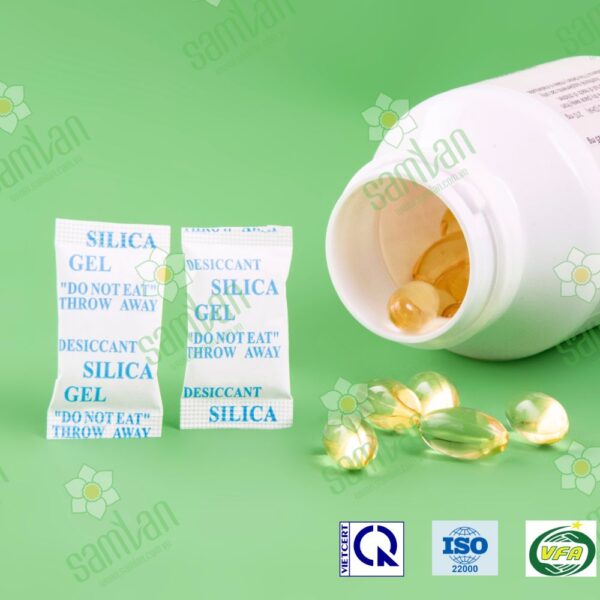
Beyond silica gel desiccants, Sam Lan delivers complete moisture control solutions tailored to each product type, storage scale, and logistics process.
- Customized moisture control consulting: Sam Lan designs solutions for multiple industries, including food, pharmaceuticals, electronics, and mechanical components. Before proposing a solution, Sam Lan evaluates product characteristics, mold risk, and storage conditions.
- Diverse desiccant solutions: Instead of offering only one type, Sam Lan provides multiple desiccant options with varying absorption capacities, ensuring optimal moisture control while minimizing costs.
Silica Gel desiccant is a cost-effective moisture protection solution, but only when used correctly. Mold issues often result from incorrect dosage, poor packaging, or high product moisture levels, rather than from the desiccant itself.
Conclusion
To maximize moisture control efficiency, businesses need to understand the properties of silica gel and choose the right solution for their specific needs. If your products still become moldy despite using desiccants, contact Sam Lan for expert consultation and customized moisture protection solutions that deliver long-term effectiveness.
Contact Sam Lan today for professional consultation on selecting the right sealing films, desiccants, and packaging solutions that match your product materials, container sizes, and protection requirements.
 News - Events
Preserve Lunar New Year Treats and Dried Foods with Seal Liners and Desiccants
 News - Events
Desiccant Beads: Best Material to Remove Moisture From Products
 News - Events
Seal Compatibility Guide: How to Choose the Right Seal for PET, HDPE, and Glass Bottles
 News - Events